Creative Tech Almanac
Inspired by The Backstage Handbook, we created a web-based compendium of knowledge for Creative Technologists and Technical Directors
- Role
- Co-Founder, Editor, Systems
- Year
- 2025
- Tags
- Creative Technology, Documentation, Community, Open Knowledge, Writing, Ethics
- Tools
- BookStack, Docker, MariaDB, nginx, Python, Flask, Claude Code
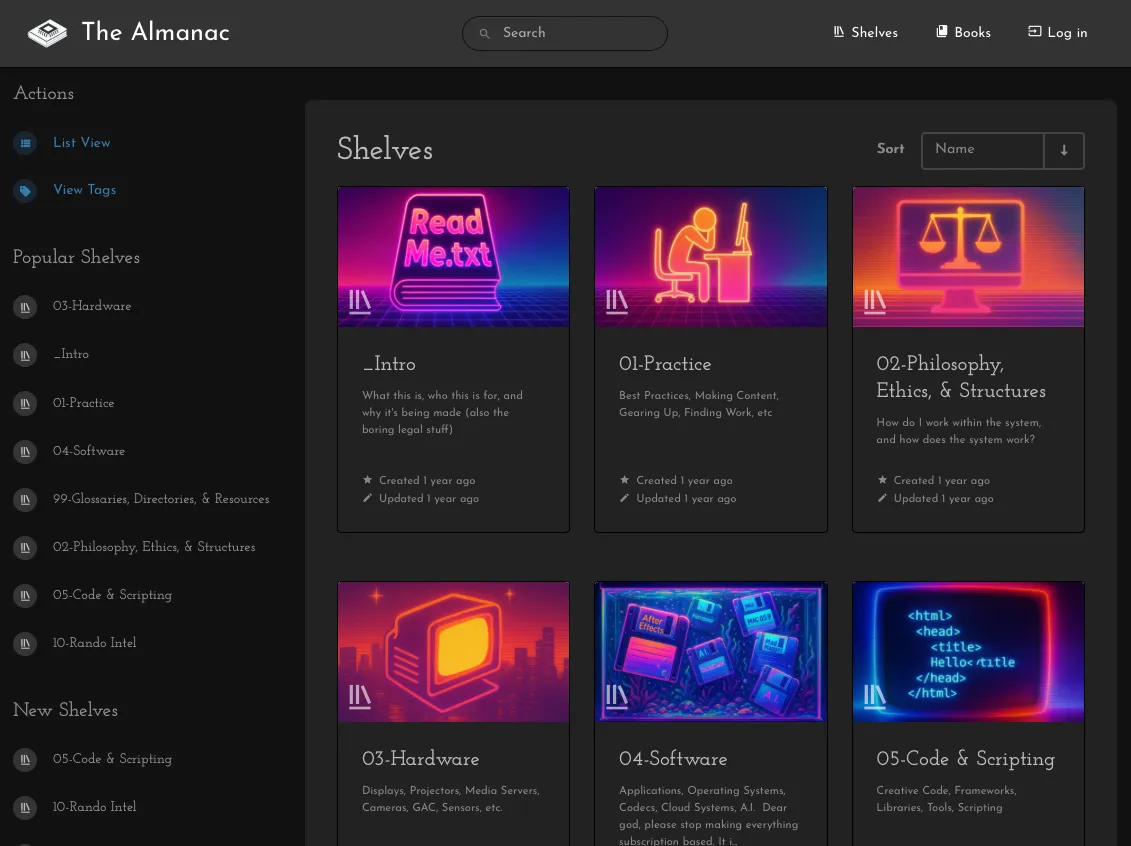
For years I kept everything I learned on jobs in one massive Google doc, shared with whoever asked: projector throw and blend math, which codec to fight about, what to charge, how to set up a Windows show machine so it survives opening day. It got too big to search and too useful to stay a doc.
So Blair Neal and I turned it into the Creative Technology Almanac, a free, open wiki for a field that mostly learns by making the same mistakes in private. I describe it as somewhere between The Backstage Handbook, a nerd-centric Wikipedia, and a forum full of dorks arguing about banding in H.264 files.
Creative technology isn't just "the intersection of art and technology" anymore. It's a field with its own methods, and almost none of it is written down. Most of it gets passed along on set, or learned the hard way at 4 a.m. before an opening.
Our bet is that hoarding doesn't protect anybody. What makes someone good in this work is taste and problem-solving, not a secret list of tools. As one practitioner puts it, "just because you've seen my kitchen, doesn't mean you know how to cook." Every hour someone spends re-solving a solved problem is an hour they could have spent making something.
It's also an inclusion problem. A lot of this knowledge feels like it has to be earned through mistakes or through knowing the right people, and opening it up is one of the most direct ways to widen who gets in.
What's In This Thing?
- Practice. Budgeting, rates and scoping, finding work, travel, gearing up, and getting help.
- Ethics and structures. Rate ethics (your client can buy the work, not the skills you brought to it), show and installation quality standards (does that feature film really need to play at 60 fps?), AI ethics, and a page called "Cam's How To Sleep At Night".
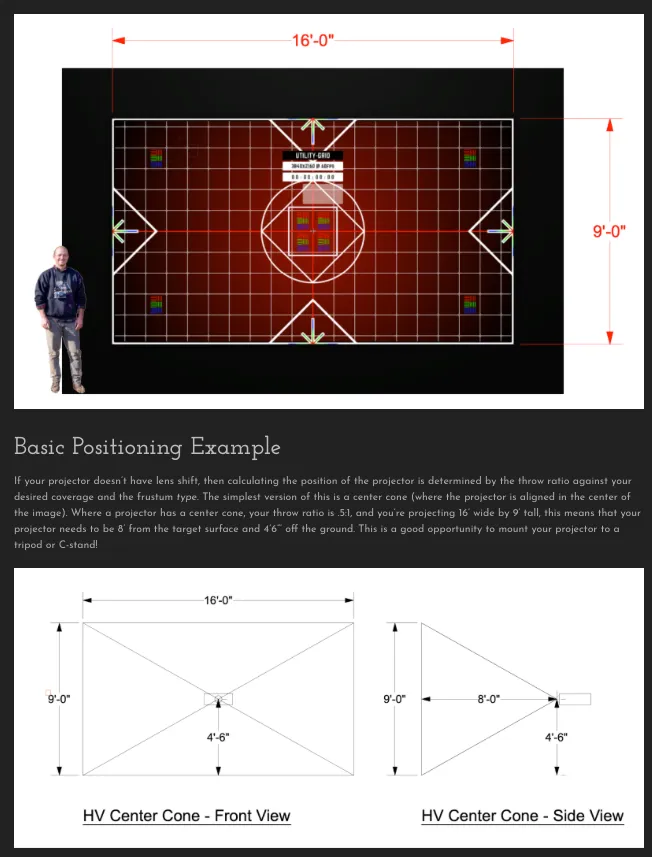
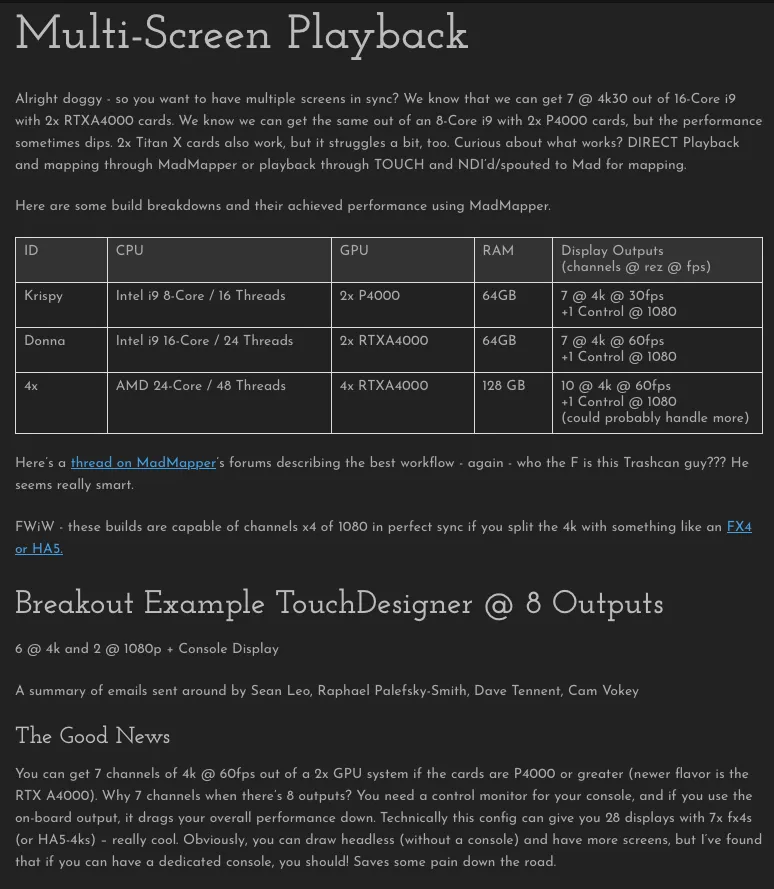
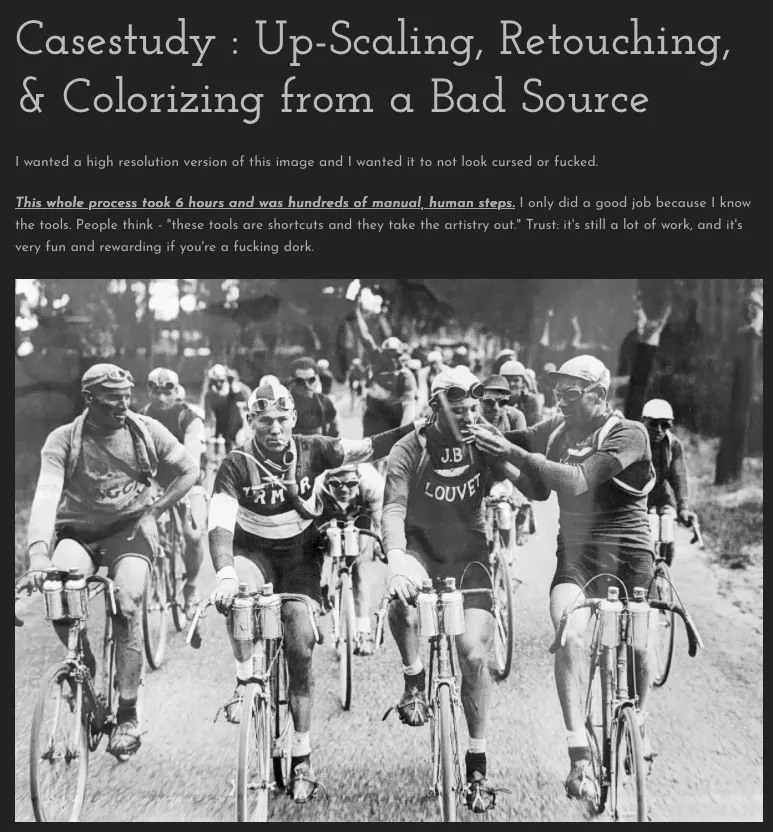
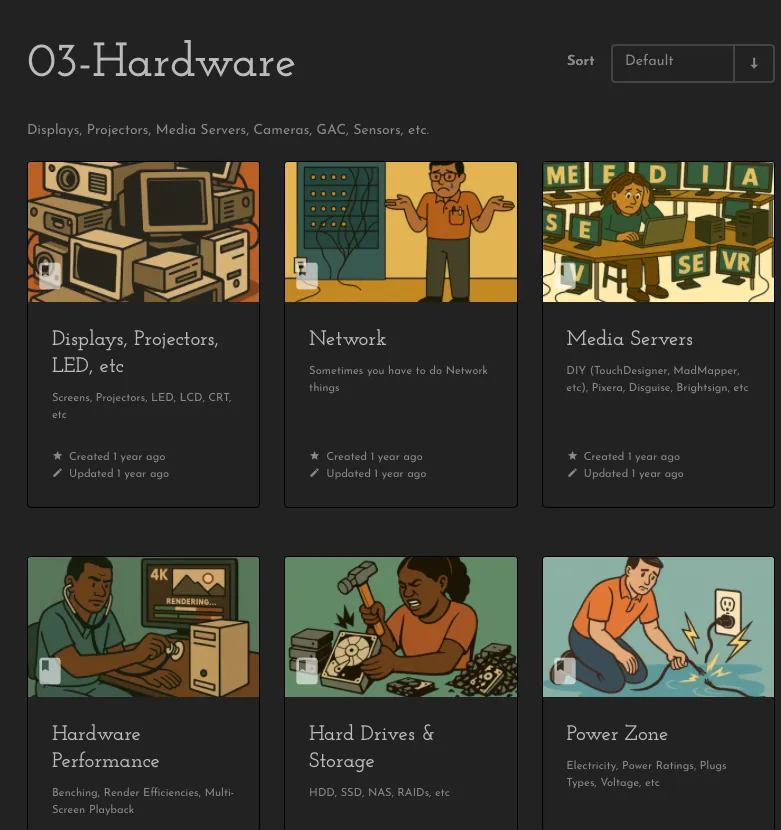
- Hardware. Projection from overview to rigging and positioning, signal distribution, cameras of every kind (depth, infrared, high-speed), multi-screen playback builds with the frame rates they actually reached, and a projector-blend rendering case study.
- Software and code. Media servers, codecs, applications and hotkeys, Windows commissioning, terminal cheat sheets, ffmpeg and exiftool, networking, cloud storage speed tests, and an AI book with case studies of tools I've built.
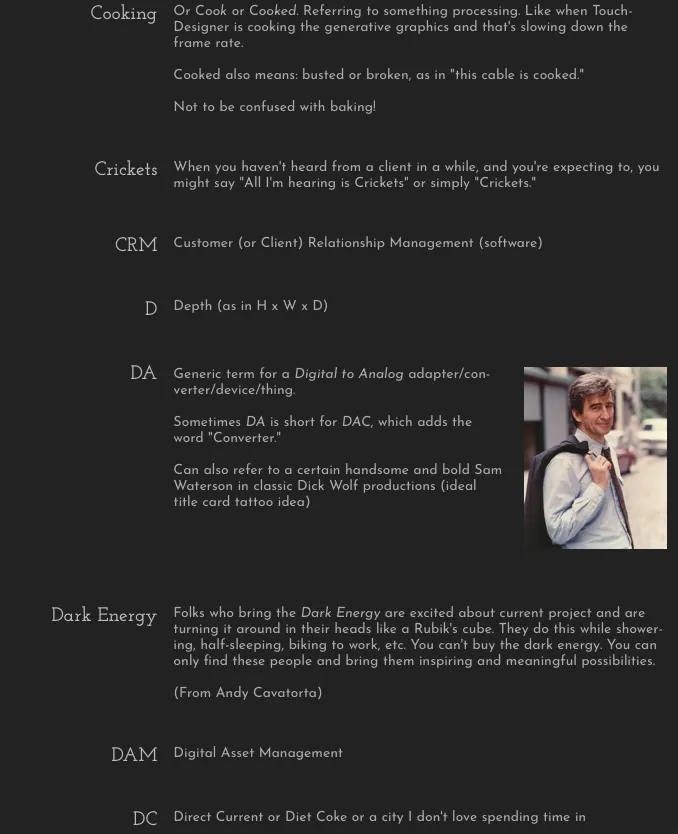
- Reference. Tech language glossary, plus software, vendor and stock directories.
The tone is deliberate. The pages are opinionated, a little silly, and honest about money and privilege: our bios include a personal disclosure about where we came from and what it gave us.
Alright, let's do the numbers 🎶
- 1 Google doc that started it
- 2 co-founders
- 8 shelves
- 40 books
- 49 chapters
- 179 public pages, 143 of them mine
- 154 glossary terms
- ~77,600 words
- 657 page revisions
- 38 collaborators, colleagues and mentors on the credits page
Built with: BookStack (self-hosted, Docker, MariaDB, nginx), plus two Python webhook services I wrote with Claude Code. Original content is licensed CC BY-SA 4.0.
Thanks to Blair and to everyone on the credits page.
If you've got something to add, start here.
Project Gallery
1 / 7